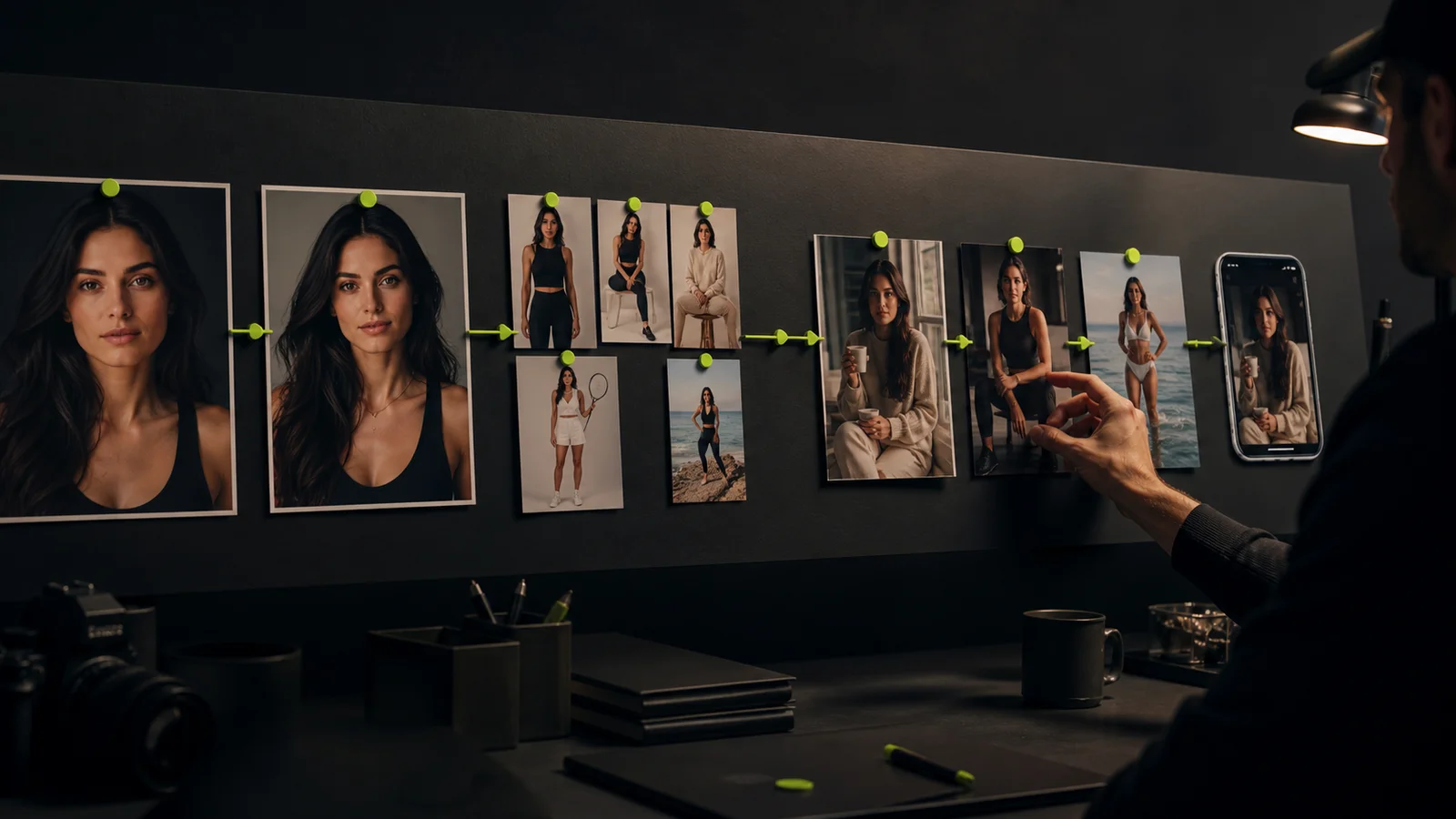
An AI virtual influencer is a synthetic character presented through an ongoing stream of content. The character can be fictional while the editorial operation behind it is real: someone chooses the subjects, produces the assets, reviews the message, and responds to the audience.
The first question is why that audience would return. A recognizable face can connect posts visually, but it does not create a useful subject, a trustworthy claim, or a business model by itself. Build a small proposition and test it before increasing production.
Distinguish the character from the channel
The character is the identity: appearance, name, voice, and recurring perspective. The channel is where that identity meets an audience. A single character may appear in several formats, but each destination still needs an appropriate crop, caption, and publishing decision.
For terminology, see the difference between an AI influencer, virtual influencer, and AI character. These labels can overlap; define the actual deliverable when speaking with collaborators or clients.
Write a one-sentence editorial promise. An illustrative example is a fictional travel-style creator who explains how a scene was designed. That gives a viewer something to learn without inventing a real trip or a personal endorsement.
Build a recognizable starting identity
Use a clear reference you own or have permission to use. Document which traits should stay stable and which can vary. A face, hairstyle, wardrobe palette, and caption voice can form a useful baseline, but keep each decision specific enough to review.
Generate a small set of scenes before launching a large calendar. Compare a portrait, a wider composition, and a different angle. If the identity drifts, revise the baseline rather than assuming captions will connect unrelated faces.
Fanerse Studio supports reference-guided creator images and eligible video workflows. Use its outputs as material for review. A consistent-character test gives you a practical acceptance process before content reaches an audience.
Choose repeatable formats with a purpose
| Format | Audience purpose | Production requirement |
|---|---|---|
| Scene breakdown | Explain a creative decision | Approved image and accurate notes |
| Visual series | Explore a recurring theme | Consistent identity and varied compositions |
| Short presenter clip | Explain one idea | Reviewed script, speech, and video |
| Behind-the-scenes comparison | Show the production process | Clearly labeled drafts and final assets |
Choose formats you can finish consistently. Repeating a topic with a useful new example can be more coherent than changing the character's entire role to follow each trend.
Keep a distinction between fictional narrative and factual claims. A character can tell a clearly framed story; a statement about a real product, person, or event needs verification. Do not turn generated visuals into fabricated testimonials.
Make the synthetic identity understandable
Describe the character clearly in its profile and use suitable AI labels or disclosure for the content and destination. Review the destination's current publishing requirements when preparing the post.
Show enough process for the audience to understand what they are seeing. A caption can explain that an image is a generated concept, or that a presenter is synthetic, without pretending the character personally experienced a real event.
Assign a human editorial owner to questions, corrections, and sensitive responses. A fictional persona should not obscure who is responsible for a commercial claim.
Compare commercial formats without assuming revenue
An audience can support several possible offers, but each needs a clear deliverable and actual demand. Treat monetization as a hypothesis to test, not a direct consequence of image quality.
- Commissioned content: Produce an agreed set of images or video for a client's brief.
- Asset licensing: Define the permitted use of a reviewed set of outputs.
- Content packs: Package a coherent collection with an accurate preview and file description.
- Creator listings: Offer an eligible creator under the listing's stated conditions.
In Fanerse, Marketplace creator listings and Links content packs are separate workflows. Studio generation is paid through plans and credits; do not describe that as the payment process for every sale. Check current eligibility, purchase, and settlement terms for the chosen offer.
Use the digital content selling guide to think through packaging and delivery. Measure completed transactions and support workload rather than treating listing views as income.
Measure audience fit and production fit separately
Audience fit concerns whether people understand and value the content. Look at relevant comments, saves, clicks, and the actions associated with the post's objective. Avoid comparing unlike formats or treating a single high-view post as a stable result.
Production fit concerns whether the team can keep delivering. Track usable assets, rejected attempts, review time, and the cost of finished output. An idea may attract interest while still requiring too much correction to repeat at your intended pace.
Keep a record linking each published URL to its creative brief and final asset. That allows you to inspect what actually changed when a format performs differently.
Scale the format that earns its place
Begin with one character, one audience, and a small set of repeatable formats. Review the first cycle before adding channels or more identities. Expand what you can produce and explain consistently.
For the operational side, continue with the virtual content creator production guide. Use Fanerse Studio to develop and review the visual assets while keeping editorial strategy, publication, and commercial decisions explicit.