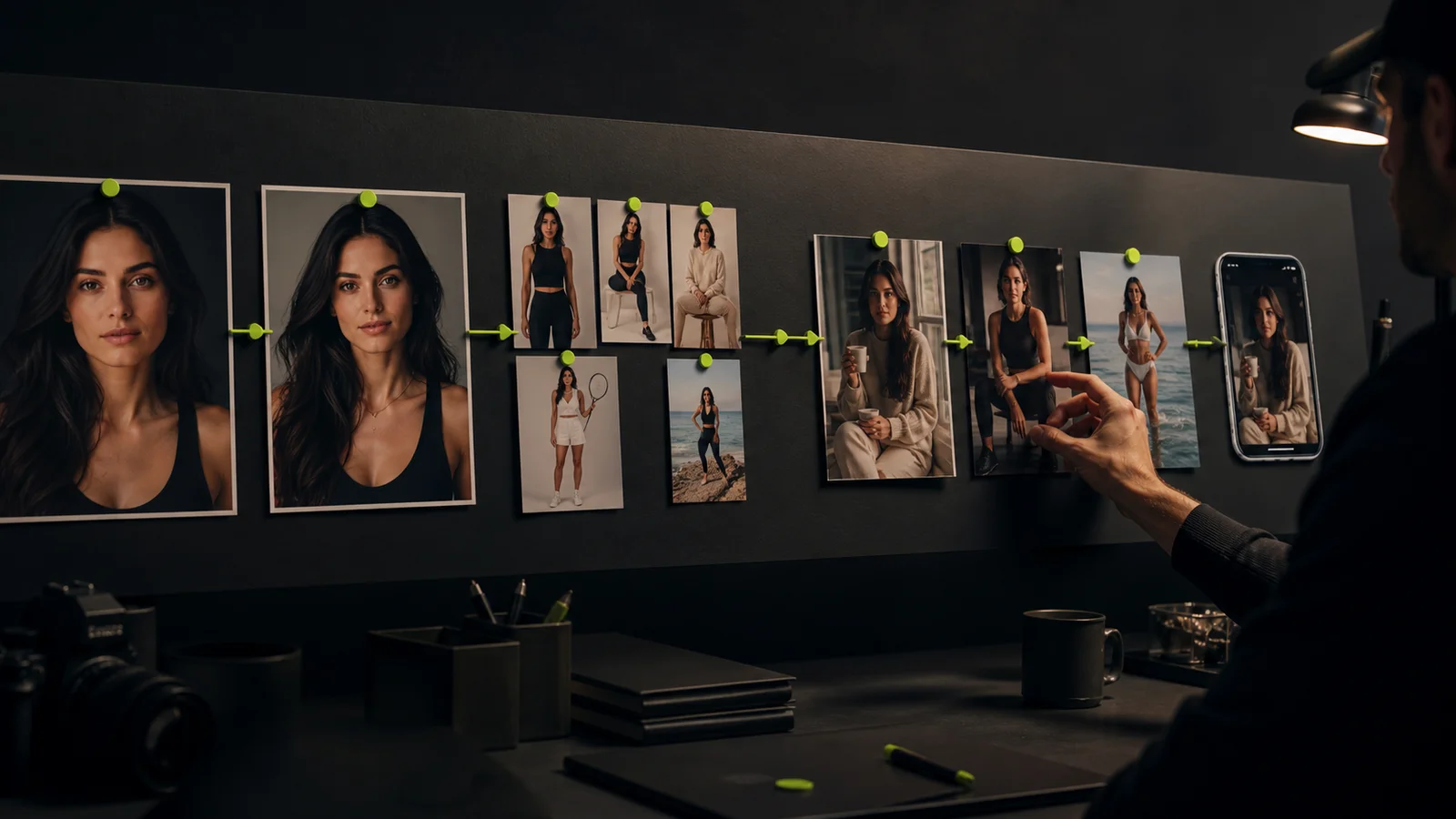
An AI clone is a synthetic representation that reproduces selected aspects of an identity, such as appearance or voice. The label can describe a talking portrait, a digital double, or a system that imitates a person's communication style. Those are different projects, and permission for one should not be assumed to cover the others.
Before making a convincing result, establish whose identity is involved, which source material is permitted, and who can approve its use. This guide offers a production checklist for that review. It does not establish legal permission or replace an agreement with the person represented.
Choose between a fictional character and a real-person likeness
A fictional creator can have an original name, approved visual references, and a clearly fictional biography. A real-person likeness raises additional questions about the person's intended participation and the uses they have agreed to.
Write the choice into the brief. “Create a fictional presenter” is different from “make an employee appear to deliver this script.” A publicly accessible photo or recording is not a permission record. If the project depends on a specific person's identity, resolve that permission before uploading their material.
Keep face, voice, script, and distribution scope separate in the review. This prevents an approved photo from becoming an unexplained authorization for a speaking endorsement.
Record the intended use before generating
| Record | Question to answer |
|---|---|
| Subject or character | Whose identity is being represented? |
| Source material | Where did the image or audio come from? |
| Permission evidence | What document or approval supports this use? |
| Intended output | Still image, speaking video, or another format? |
| Message and destination | What will be said, and where will it appear? |
| Review owner | Who can approve or stop publication? |
| Change contact | Who handles questions or a request to stop future use? |
Treat this as a project record. It is not a template that automatically grants rights. If the intended campaign falls outside the recorded scope, resolve that mismatch before production continues.
Understand what identity guidance can and cannot show
A visual system can use a reference to guide a new scene, but a realistic output can still have the wrong facial proportions or change during movement. Compare the face against the approved source under several angles and lighting conditions.
Voice and visual review should also be independent. A plausible voice does not prove that its use was authorized, and accurate lip movement does not make the spoken statement true. Keep the approved script with the final audio and video so a reviewer can compare them directly.
Fanerse Studio provides a reference-guided workflow for creator images and eligible video. Use references you own or have permission to use, and review the result against the brief. Do not treat a generated asset as identity verification or as proof that the represented person endorsed its message.
Put a human decision before release
Use a short release checklist: confirm identity, source permissions, script, disclosure, destination, and final file. Check the exported asset rather than only the preview in the editor. Captions, cropping, or an audio replacement can change the meaning after the first review.
For example, a presenter draft approved for an internal explanation should not silently become a public advertisement. The output may be technically identical while the audience and intended use have changed.
Separate the person who prepares a draft from the account permissions needed to release it where practical. Store an approval record that identifies the specific version. That makes a later correction traceable without relying on a chat message saying “looks good.”
Keep provenance useful and modest
A practical provenance record connects the source, tool, operator, edits, reviewer, and final file. Preserve that information even when media moves between applications.
Where your tools support it, Content Credentials can add signed information about an asset's origin and editing history. The C2PA explainer describes this approach. A valid provenance record is not proof that every claim in the content is true or that every underlying use was authorized.
Do not assume Fanerse exports signed Content Credentials or embeds a particular watermark. Verify the actual output and the capabilities of each tool in the pipeline. Keep your own project records regardless of whether a destination preserves file metadata.
Plan for corrections and stopped use
Maintain a list of published URLs and the corresponding final files. If the identity owner questions a use, you need to locate the affected material, stop pending releases, and review the source of the problem.
Removing a local reference does not remove exported files from other systems. Document which destinations and collaborators hold copies and who can request corrections there. Avoid promising universal deletion or a legal outcome that the production workflow cannot establish.
Start with a small, permitted pilot
Use one documented identity, one message, and one distribution destination. Generate a short draft, compare it with the approved reference and script, and record the decision before release. Expand only when the team can reproduce that process.
For the visual input stage, use the reference selection guide. For a fictional character that needs consistent editorial behavior, continue with digital persona design. The goal is a controlled creative process in which a convincing likeness never substitutes for permission or review.