You're reviewing a campaign brief and the labels don't make the choice any easier. One option is a UGC creator filming in a bedroom, another is a fully rendered character with a carefully designed wardrobe, and a third is a face-swap avatar operated by a real person. All three may be called a digital influencer, yet they involve very different production systems, risks, and ways to earn revenue.
The market context explains why the distinction matters. The global influencer marketing industry reached about $24.0 billion in 2024, up from $21.1 billion in 2023, according to Oberlo's influencer marketing market data. Digital influencers now sit inside advertising, commerce, and media planning, not just social posting.
Table of Contents
- What Counts as a Digital Influencer Today
- The Three Main Types of Digital Influencer
- How a Modern Creator Workflow Actually Runs
- Why Virtual Influencers Grab Attention but Lag on Trust
- Four Ways Digital Influencers Turn Reach Into Revenue
- Three Campaign Snapshots From the Field
- Disclosure, Trust, and the Real Risk of Getting It Wrong
- Choosing the Right Digital Influencer Approach in 2026
What Counts as a Digital Influencer Today
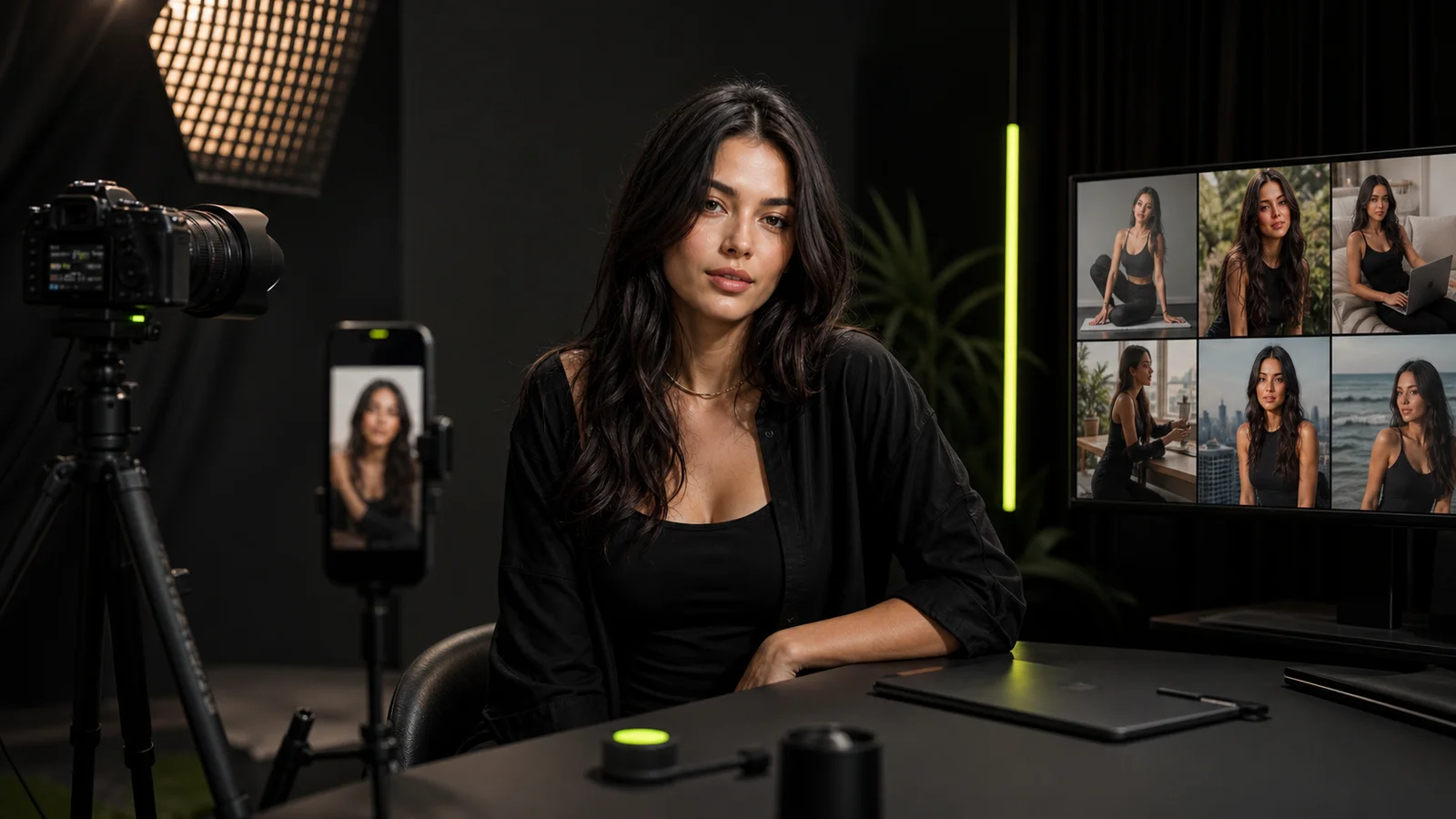
A digital influencer is a recurring on-screen identity used to build an audience and influence attention or purchase decisions. The identity might belong to a biological person, a synthetic character, or a combination of both. The important feature is repetition. Audiences recognize the same face, voice, style, point of view, or story each time the account publishes.
That definition helps resolve a common confusion. A single AI-generated image isn't automatically an influencer. It becomes part of an influencer system when a recognizable identity appears repeatedly, develops an audience relationship, and participates in communication or commerce.
The three families
Most digital influencers fit into one of three broad families:
- Human creators using AI tools: A real person remains on camera and uses software for scripting, editing, dubbing, visual effects, or production planning.
- Fully virtual personas: A studio designs the face, body, voice, wardrobe, and narrative. No single real person needs to appear as the character.
- Hybrid creators: A real person operates a digital twin, stylized avatar, or synthetic host. The audience may interact with a human creator in one context and a digital representation in another.
The boundary between these categories can shift from project to project. A human creator might use AI to produce background scenes, while a virtual persona might rely on a human writer and voice actor for every script.
Practical rule: Judge the identity system, not just the image. Ask who controls the persona, who approves the message, and whether the audience can recognize the character across posts.
The useful question has moved from “Is this real?” to “Is this a consistent identity people can follow?” That shift makes production details central. The next decision is matching the type of identity to the amount of authenticity, control, and repeatable output a campaign needs.
The Three Main Types of Digital Influencer
Think of the three types as different production agreements.
A human digital influencer owns the lived experience. The creator appears on camera, speaks in a personal voice, and usually controls the relationship with the audience. AI can help with scripts, shot lists, captions, b-roll, translations, or editing, but the creator supplies the physical presence and personal context. This approach is useful when a product needs demonstration, testimony, or an opinion grounded in use.
A virtual influencer is closer to a character franchise. A studio controls the reference images, visual identity, styling, narrative, and publishing process. The team can create scenes that would be expensive, impractical, or impossible to film with a human model. The tradeoff is that the studio must build familiarity deliberately, because the persona doesn't arrive with real-world experience.
A hybrid influencer combines those arrangements. A real creator might license a digital twin for off-camera segments, while an AI-native host uses a human writer or voice actor to shape every message. Hybrid systems can preserve a human point of view while expanding availability and visual control.
| Dimension | Human | Virtual | Hybrid |
|---|---|---|---|
| Persona control | Usually shared by the creator and brand agreement | Primarily controlled by the studio or rights holder | Shared between the real operator and studio or brand |
| Production method | Camera capture, editing, and optional AI assistance | Generated images, animation, synthetic video, and scripted content | Human footage combined with avatar, digital twin, or synthetic scenes |
| Visual control | Limited by location, appearance, schedule, and physical production | High control over wardrobe, setting, composition, and continuity | Moderate to high control, depending on the digital layer |
| Audience relationship | Direct and experience-led | Character-led and deliberately constructed | A blend of personal connection and designed identity |
| Strongest use case | Reviews, tutorials, demonstrations, and sensitive decisions | Fashion concepts, repeatable campaigns, imaginative worlds, and scalable assets | Serialized content, livestream extensions, branded hosts, and off-camera appearances |
| Main risk | Availability, inconsistent production, and rights complexity | Lower perceived credibility and identity drift | Confusion about who is speaking and how the likeness is being used |
The right choice depends less on novelty than on the brief. If the product requires proof from someone who used it, human talent usually fits better. If the campaign needs a controlled visual world and recurring assets, a virtual persona may be more practical. If both requirements matter, hybrid production gives the team more options, but it also creates more approval points.
How a Modern Creator Workflow Actually Runs
A virtual persona isn't produced by typing one clever prompt. It behaves more like a small studio pipeline, where every stage protects the character from drifting into a different person.
Start with reference and identity design
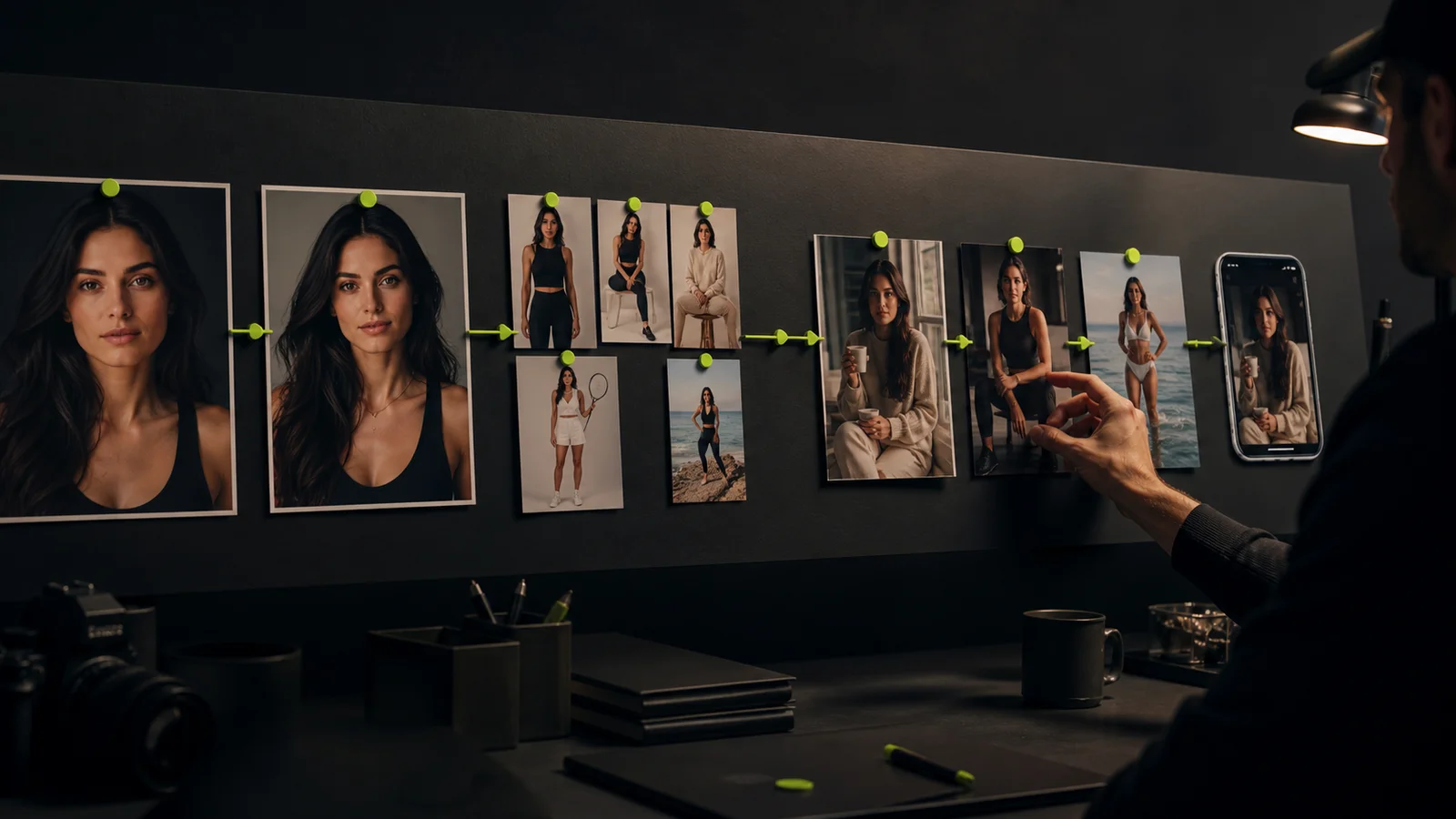
The team gathers face, body, wardrobe, mood, lighting, and camera references. Those references establish the visual boundaries before generation begins. A hero image then gives the studio a central identity reference, while facial geometry and distinctive features are checked for repeatability.
The next stage captures the identity in a usable system. Approved reference portraits and identity-guided generation help represent the character across angles, expressions, and lighting, while a reusable creative brief organizes outfits, props, locations, and moods. The purpose isn't technical complexity for its own sake. It's to make future decisions faster and more consistent.
Turn the brief into approved media
Production starts with the copy brief and storyboard. The prompt lead assembles the identity reference, scene instructions, product requirements, camera direction, and platform format. The team then generates image or video passes and checks for common failures, including altered facial features, incorrect products, awkward hands, inconsistent accessories, and off-brand emotional tone.
Post-production adds the finishing layer. Editors composite product shots, correct continuity, add captions, record or sync voice, and prepare versions for TikTok, Reels, Shorts, and feed placements. A brand reviewer checks factual claims, visual requirements, rights, and disclosure before publication.
For teams building a repeatable schedule, Fanerse's automated content scheduling workflow illustrates how planning can become part of the production system rather than a separate spreadsheet.
The studio roles are straightforward:
- Prompt lead: Converts the creative brief into controlled generation instructions.
- Identity custodian: Protects the character's face, styling, and behavioral rules.
- Editor: Turns raw outputs into platform-ready stories.
- Brand reviewer: Approves product accuracy, claims, rights, and disclosure.
The workflow is easier to understand when you see the production in motion:
A finished post is therefore the visible end of a chain of references, generation passes, editorial decisions, and approvals. The image matters, but the system behind it determines whether the identity can survive a long campaign.
Why Virtual Influencers Grab Attention but Lag on Trust
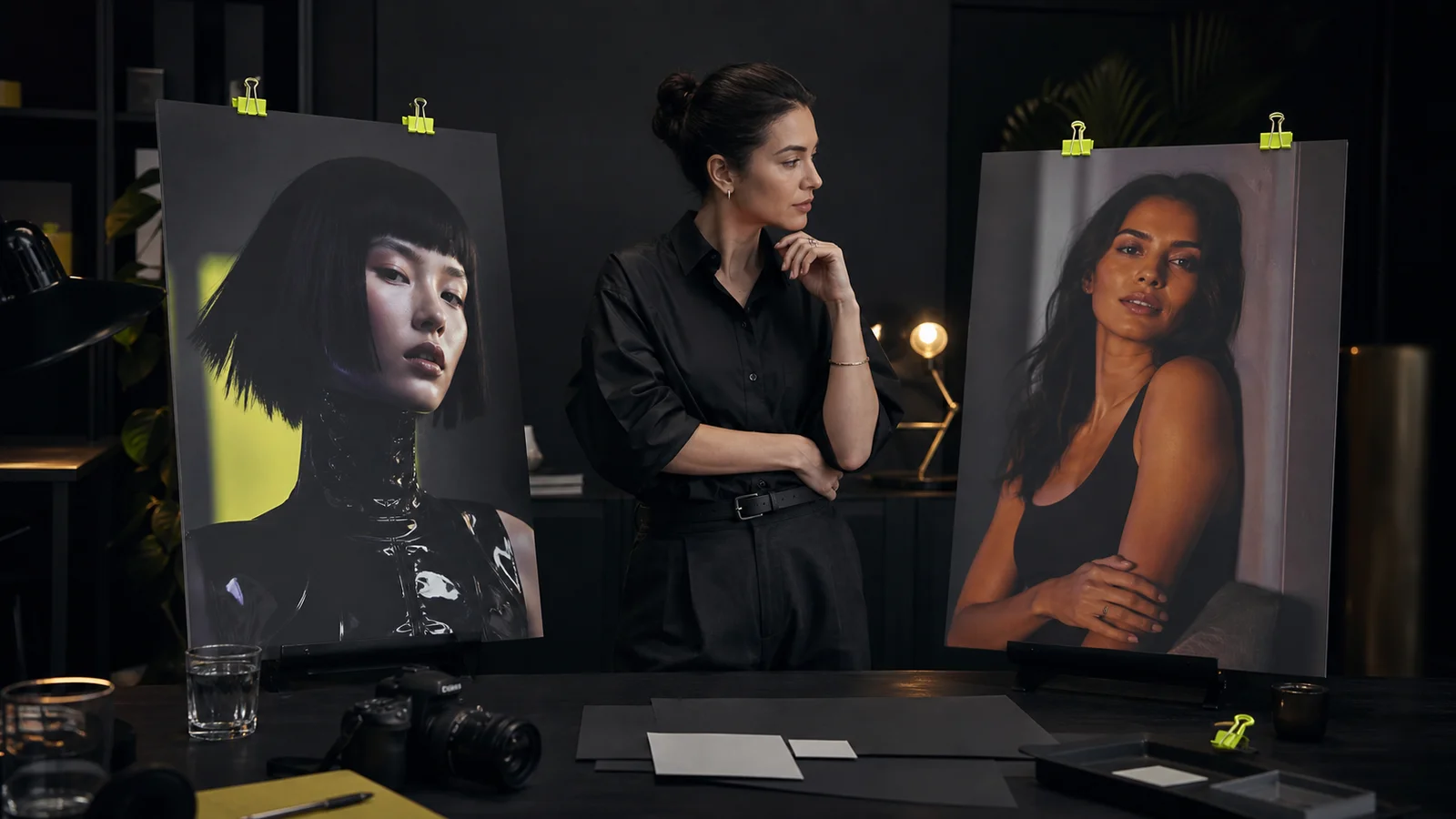
Virtual influencers often win the first battle, getting noticed. A 2026 Springer meta-analysis, summarized in the 2026 meta-analysis in the Journal of the Academy of Marketing Science, found that virtual influencers were more novel and just as effective as human influencers for driving consumer engagement. It also found that they were less effective at shaping credibility, attitudes, and behavioral intentions.
That split makes sense once attention and belief are separated. A synthetic persona can use unusual styling, controlled environments, and visual concepts that interrupt scrolling. Novelty helps a viewer notice the post, but attention doesn't automatically answer the viewer's next question: “Should I believe this person about the product?”
Design for the metric you actually need
A campaign that uses a virtual influencer should separate attention metrics from trust metrics. Track whether people remember the character and recognize the brand, then evaluate whether they understand the message and accept the product claim. A single engagement figure can hide the difference between visual curiosity and genuine persuasion.
For lower-risk products, a virtual persona may work well in lifestyle scenes, visual storytelling, fashion concepts, or recurring entertainment. For health, finance, family, or other high-stakes decisions, human reviewers or hybrid creators can provide context that a synthetic identity can't claim to possess.
A stronger campaign structure might pair the virtual character with:
- A human reviewer: Someone who can explain real use and limitations.
- Clear brand context: A visible explanation of what the character is and who operates it.
- Repeated exposure: Consistent styling, voice, and story so familiarity grows through continuity rather than novelty alone.
The discussion of virtual influencer statistics and trends is useful for framing the opportunity, but the operational lesson is simple. Use virtual creators to earn attention, then build trust through transparency, consistency, relevant context, and human oversight.
Four Ways Digital Influencers Turn Reach Into Revenue
Revenue starts with a commercial action. The audience sees a post, understands the offer, and has a clear path to buy, license, subscribe, or request more content. A digital influencer can support several paths, but each needs a different rights and measurement setup.
Sponsored posts and brand deals
A brand pays for defined deliverables, such as a short video, carousel, livestream appearance, or usage period. A fitness creator might agree to produce a training demonstration and a follow-up story series, with the fee shaped by the niche, format, audience relationship, production effort, and usage rights.
The important document is the deliverables sheet. It should specify platforms, posting dates, revisions, exclusivity, paid media usage, approval rounds, and disclosure language.
Affiliate revenue
Affiliate campaigns connect the creator to tracked links, product pages, or discount codes. A beauty creator can demonstrate a product, place the tracked link in a profile or content destination, and earn a commission when a viewer completes an eligible purchase.
This model rewards conversion rather than simple visibility. The creator should know which products are included, how returns affect commissions, and how long tracking remains active.
Content packs and licensing
A studio can produce a reusable library of images, short videos, templates, or prompt-guided assets. A virtual persona might release a holiday content pack containing approved seasonal scenes, product placements, and captions that a brand licenses for its own channels.
The contract needs to distinguish between owning the asset, using the asset, and modifying the asset. It should also define where the content may appear and whether competing brands are excluded.
Marketplace licensing and appearances
A digital character can be listed for specific licensing arrangements, including limited or exclusive use. A marketplace listing might offer individual assets, a themed campaign package, or a virtual appearance, with different prices and restrictions for each tier.
The guide to monetizing AI creators provides a useful framework for thinking about packaging, licensing, and direct sales.

Commercial rule: Don't sell “an AI character” as an abstract idea. Sell a defined asset, audience action, usage right, or appearance with a clear approval path.
The strongest monetization systems connect content production to checkout or licensing without making the audience guess what happens next.
Three Campaign Snapshots From the Field
The following examples are workflow illustrations, not reported case studies. They show how different creator types can move from brief to publication without treating content as a single handoff.
A human travel creator receives a destination brief and gathers a mood board with colors, architecture, and food references. The creator handles the location shoot, sends selects to the agency editor, reviews the carousel draft, and approves a caption containing affiliate links. The brand checks factual details and product placement before the creator publishes.
A virtual fashion persona starts with a prompt brief covering silhouette, fabric, setting, and movement. The identity custodian approves the reference image, the generation team produces pose and outfit passes, and an editor assembles a short video with a human-recorded voiceover. The agency routes the TikTok draft to the brand, which approves the shoppable tag and disclosure before release.
A hybrid creator uses a real streamer for live segments and an AI avatar for off-camera transitions. The creator approves the message and voice, the studio checks avatar continuity, and the brand reviews both the live talking points and synthetic clips. The final campaign keeps one approval record for two different production modes.
| Influencer Type | Typical Timeline | Key Tools | Approval Owner |
|---|---|---|---|
| Human travel creator | A planned shoot and edit cycle | Camera, location references, editing software, affiliate link system | Creator approves voice and agency edit, brand approves claims and placement |
| Virtual fashion persona | A generation, revision, and publishing cycle | Reference images, identity model, prompt library, video editor, shoppable tag | Studio approves identity, brand approves product and disclosure |
| Hybrid streamer | Coordinated live and synthetic production | Streaming setup, avatar system, voice tools, editorial review | Creator and brand jointly approve message and final assets |
The handoffs matter because each creator type concentrates risk in a different place. Human campaigns depend on availability and personal delivery. Virtual campaigns depend on identity continuity and rights. Hybrid campaigns depend on keeping the audience clear about which layer they're seeing.
Disclosure, Trust, and the Real Risk of Getting It Wrong
Disclosure is the plain-language notice that tells an audience about a sponsorship or other material connection. Sponsored content is media created or published because a brand provided payment, products, access, or another benefit. A material connection is any relationship that could change how a reasonable viewer interprets the recommendation.
Trust isn't binary. In its 2025 Influencer Trust Index, BBB National Programs reports that 74% of surveyed consumers trust or somewhat trust influencer content, while only 5% trust it completely. The same study says 58% have made a purchase because of an influencer endorsement, so partial trust can still support commerce.
A disclosure label cannot repair a misleading presentation by itself. BBB National Programs reports that 70% of surveyed consumers felt deceived when they later discovered an undisclosed partnership. Disclosure should therefore be clear, timely, and supported by honest context, not treated as a last-minute hashtag.
Make transparency visible inside the content
A practical disclosure system uses multiple cues:
- In-post disclosure: Put the relationship in the video, image, or opening text when possible.
- Caption disclosure: State the sponsorship clearly before the viewer has to expand a long caption.
- Profile context: Explain the synthetic, hybrid, or operated nature of the persona in the bio or account description.
- Rights record: Keep written permission for likenesses, references, voices, products, and distribution.
The audience responds to what the post appears to be, not only to the technical wording of a contract. If a synthetic character looks like an ordinary human creator, hiding the production method can create a credibility problem even when a small label exists somewhere on the page.
Before publication, the brand reviewer should ask who paid for the content, whether the relationship is visible immediately, whether the persona's synthetic or hybrid nature is clear, and whether the claims match the available evidence. Disclosure should be designed with the creative, not added after the final export.
Choosing the Right Digital Influencer Approach in 2026
The choice is a tradeoff. Human creators usually offer stronger personal credibility and lived experience. Virtual personas offer attention, visual control, and repeatable production. Hybrid creators combine those strengths, but require more careful coordination around identity, rights, and disclosure.
Score the brief against three variables:
- Objective: Does the campaign need attention, education, proof, conversion, or a continuing story?
- Production speed: Does the team need a physical shoot, a repeatable synthetic pipeline, or both?
- Risk tolerance: Would a misleading impression create meaningful harm in this category?
Then make the operating choice:
- Choose human talent when personal experience, demonstration, or sensitive judgment drives the decision.
- Choose a virtual persona when visual novelty, controlled worlds, and repeatable assets matter most.
- Choose a hybrid creator when a campaign needs a human point of view plus scalable appearances.
The final checklist should fit on one page:
- Define the audience outcome.
- Decide whether the brief needs novelty or proof.
- Select the persona type.
- Set the production cadence and approval owners.
- Document disclosure and usage rights.
- Assign one person to measure attention, trust, and commercial action separately.
Category risk deserves special attention. In a 2025 CFA Institute survey, only 2% of influencers were SEBI-registered, while 33% gave explicit stock recommendations and 63% failed to adequately disclose sponsorships or financial affiliations, according to the CFA Institute research on influencer credibility. Reach doesn't establish expertise, especially in regulated fields.
A digital influencer works when identity, workflow, monetization, and trust support the same campaign goal. In 2026, the right approach isn't a default selection. It's a deliberate match between what the audience needs to believe and what the production system can honestly deliver.
Fanerse offers a reference-guided studio for building recognizable digital characters, generating identity-consistent images and eligible video outputs, organizing schedules, and packaging content for monetization. Visit Fanerse to explore how a repeatable AI creator workflow can support your next campaign.