The virtual influencer industry has moved from novelty to mainstream faster than almost anyone predicted. What started with a handful of CGI characters on Instagram has evolved into a global market with real revenue, real brand investment, and real audience engagement. Here are the numbers that define the space in 2026.
Market Size and Growth
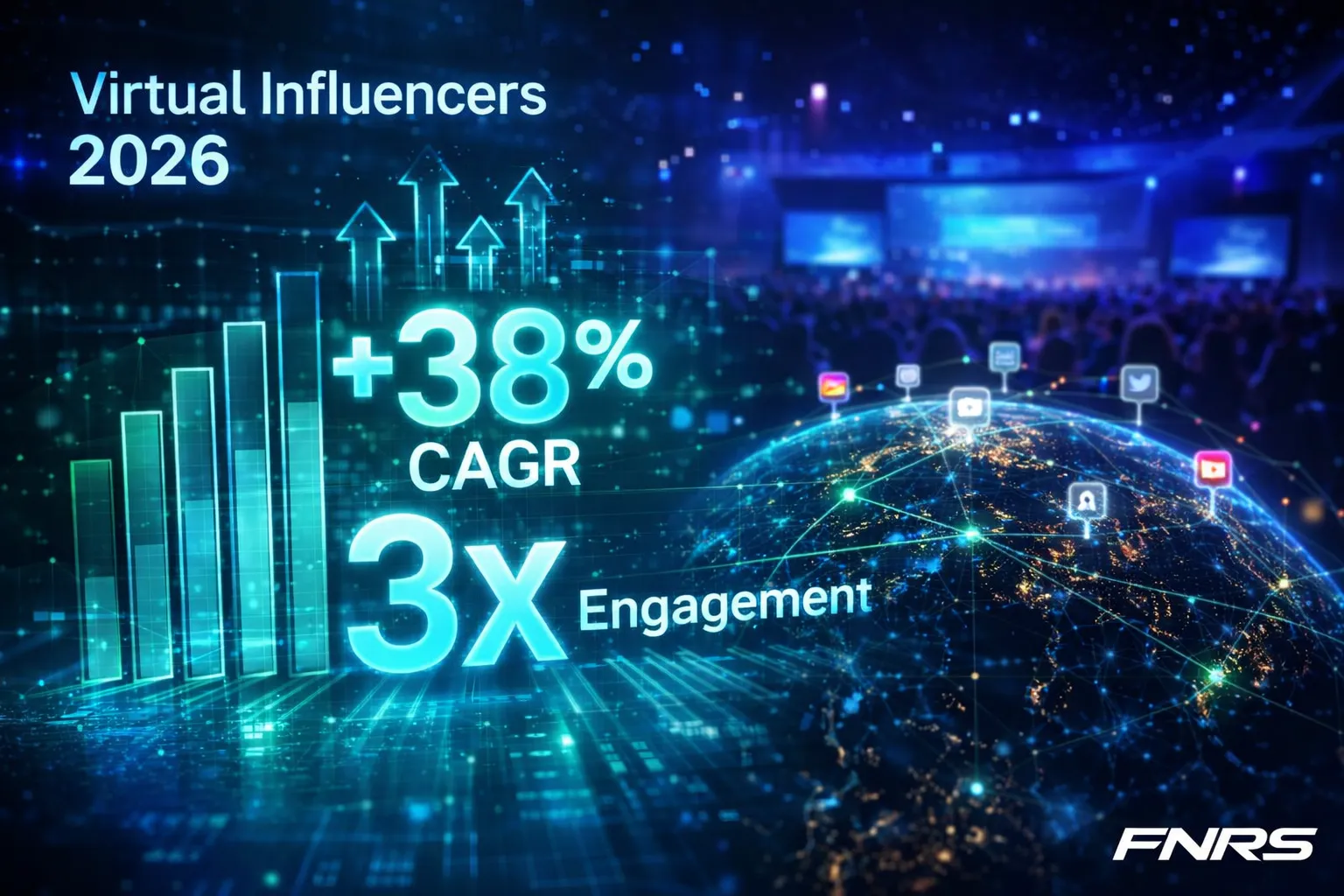
The global virtual influencer market has been on an extraordinary growth trajectory. Industry analysts project the market to reach $37.8 billion by 2030, growing at a compound annual growth rate (CAGR) of approximately 38% from 2024. This growth is driven by brand adoption, creator economy expansion, and rapidly improving AI generation technology.
In 2025 alone, investment in virtual influencer technology and platforms exceeded $2 billion globally, with significant capital flowing into AI generation tools, character consistency systems, and creator management platforms.
Engagement Metrics
Perhaps the most compelling data point for anyone considering AI content creation is the engagement comparison:
- Virtual influencers average 3-5% engagement rates on Instagram, compared to 1-2% for human micro-influencers and under 1% for human mega-influencers.
- Comment sentiment on virtual influencer posts trends more positive than on human influencer content, with fewer negative or trolling comments.
- Story view-through rates for virtual influencers are approximately 15-25% higher than human creator averages, driven by curiosity and visual consistency.
The engagement premium exists across platforms. On TikTok, AI-generated content that discloses its AI nature regularly achieves above-average view counts, particularly in fashion, lifestyle, and entertainment verticals.
Brand Adoption
Brand spending on virtual influencer partnerships has increased significantly year over year. The appeal to marketers is clear: virtual influencers offer perfect brand safety (no scandals), total creative control (any scenario, any location), unlimited availability, and consistent quality.
Major brands that have partnered with virtual influencers include luxury houses like Prada and Balmain, tech companies like Samsung, beauty brands like Maybelline, and mass-market brands like KFC (with its virtual Colonel Sanders). The trend is accelerating as more brands see positive ROI data from early adopters.
Creator Economy Impact
The creator economy is undergoing a fundamental structural shift:
- Over 50% of content creators report experimenting with AI tools for content creation in 2025.
- AI-assisted content production costs are 60-80% lower than traditional photography for comparable output quality.
- Time to produce daily content drops from 2-4 hours (shooting, editing, posting) to 15-30 minutes with AI generation tools.
- Multi-character operators — people running multiple AI creators simultaneously — are the fastest growing segment of the creator economy.
Technology Trends
Several technology trends are shaping the 2026 landscape:
Character consistency has been solved. Multi-source generation systems (like the DNA system used by Fanerse) can now maintain perfect visual identity across hundreds of generations. This was the primary technical barrier to AI influencers — and it's been crossed.
Video generation is becoming viable. Image-to-video models can now produce 5-10 second clips of sufficient quality for social media stories and reels. Full talking-head video with lip-synced speech is emerging, enabling AI influencers to create video content that was previously impossible.
Environment consistency is the new frontier. Platforms that offer persistent environments — consistent rooms, spaces, and settings — give AI creators the next level of believability. This is where the industry is moving in 2026, with Fanerse's Persistent Worlds leading the approach.
Monetization infrastructure is maturing. Direct-to-consumer sales tools, crypto payment integration, and creator marketplace platforms are giving AI influencer operators more ways to generate revenue without depending on a single platform.
Geographic Trends
The virtual influencer market is global, but certain regions are leading adoption:
- Asia-Pacific leads in both virtual influencer creation and audience acceptance, with Japan, South Korea, and China showing the highest engagement rates with AI characters.
- North America leads in brand spending on virtual influencer partnerships and platform development.
- Europe is the fastest-growing market, with particular strength in the UK, Spain, and Northern Europe.
- Latin America and Middle East are emerging markets showing rapid audience growth for virtual influencer content.
What This Means for Creators
The data tells a clear story: the virtual influencer market is growing rapidly, engagement metrics are strong, and the technology has reached a quality threshold where AI content competes with traditional photography. For creators and entrepreneurs, the opportunity window is wide open — but early movers will have a significant advantage as the market matures and competition increases.
Get ahead of the curve — create your first AI influencer free →