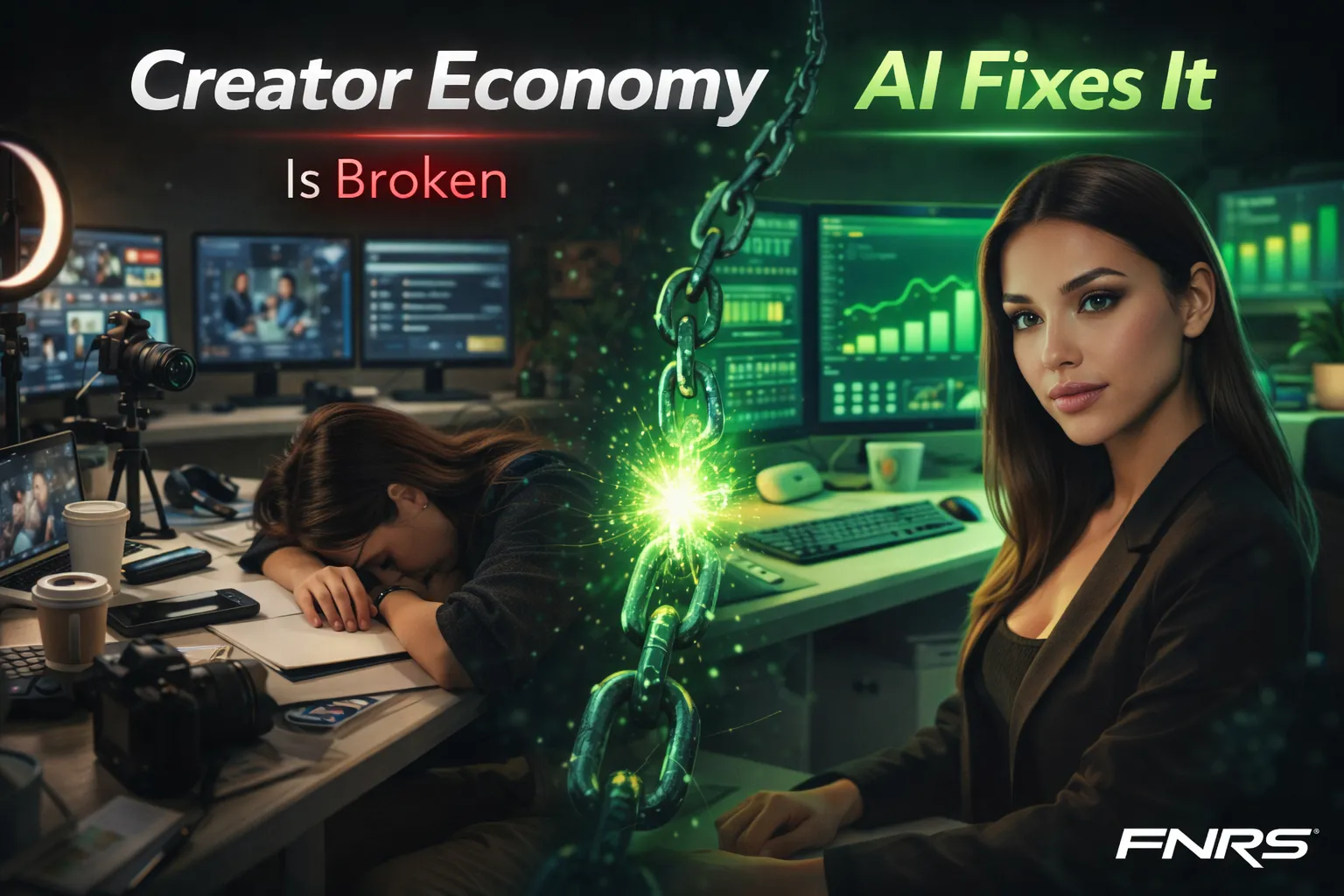
The creator economy was supposed to be liberating. Post what you love, build an audience, earn a living on your own terms. The reality looks very different.
The Numbers Are Brutal
Let's be honest about the state of human content creation in 2026:
- 90% of content creators earn less than $50,000 per year — and that's before expenses like equipment, software, and production costs.
- The average content creator burnout timeline is 18-24 months. The relentless demand for daily content, combined with algorithm pressure and audience expectations, creates unsustainable workloads.
- Platform dependency is extreme. A single algorithm change can cut reach by 50% overnight. A policy update can demonetize an account with no appeal. Creators build on rented land and have zero control over the foundation.
- Privacy erosion is permanent. Content shared online lives forever. Career changes, relationship changes, personal growth — all complicated by a permanent public archive of past content.
The creator economy as it exists today is designed to extract maximum value from human creators while returning minimal stability, security, or sustainability.
Where AI Changes the Equation
AI content creation doesn't just improve on the existing model — it fundamentally restructures it. Every major pain point of human content creation is addressed:
Burnout → Impossible
AI creators don't get tired, don't get sick, don't have bad mental health days, and don't need vacations. Content production is limited only by credits, not by human capacity. You can generate a month's worth of content in an afternoon, then spend the rest of the month on strategy and distribution.
Algorithm Dependency → Diversification
With tools like Fanerse, you can run multiple creators across multiple platforms simultaneously. If Instagram's algorithm tanks one account, your other creators on TikTok and Twitter keep performing. Link Packs add a platform-independent revenue stream that no algorithm can touch.
Privacy Risk → Zero Exposure
Your AI creators are fictional characters. Your real identity, your real face, your real life — none of it is exposed. You can build a seven-figure content business and no one needs to know it's you. This is genuinely life-changing for people who want creator economy income without creator economy exposure.
Scale Limitations → Unlimited Growth
A human creator is one person. An AI content operator can be 10, 20, or 100 creators. Each with their own DNA, their own environments, their own audiences, and their own revenue streams. The Factory model turns content creation from a personal endeavor into a scalable business.
Aging → Irrelevant
Human creators face an uncomfortable reality: much of the creator economy's revenue is driven by youth and physical appearance, both of which are temporary. AI creators don't age, don't change, and maintain their peak aesthetic indefinitely. A character you build today can still generate revenue ten years from now with the same visual quality.
The Counterarguments (and Why They're Fading)
"But AI content isn't authentic." Neither is heavily filtered, professionally lit, Facetuned influencer content — yet it drives billions in revenue. Authenticity in the creator economy has always been a curated performance. AI simply makes the production process more honest about that reality.
"Audiences won't engage with AI." The engagement data disagrees. Virtual influencers consistently achieve higher engagement rates than human micro-influencers. The audience cares about content quality and entertainment value, not production method.
"It'll get regulated away." Regulation around AI content is focusing on transparency (disclosure requirements) rather than prohibition. Disclosing that content is AI-generated doesn't meaningfully impact audience engagement. The regulatory trend supports responsible AI content creation, not banning it.
The Shift Is Already Happening
This isn't a prediction — it's a description of what's already underway. Over 50% of content creators report using AI tools. Virtual influencer brand deals are growing year over year. AI content agencies are emerging as a new service category. And platforms like Fanerse are making the tools accessible to anyone, not just technical experts.
The creator economy isn't dying — it's evolving. And the creators who evolve with it will capture the lion's share of value in the next era of digital content.
The question isn't whether AI will reshape the creator economy. It already has. The question is whether you'll be creating with the new tools or competing against them.