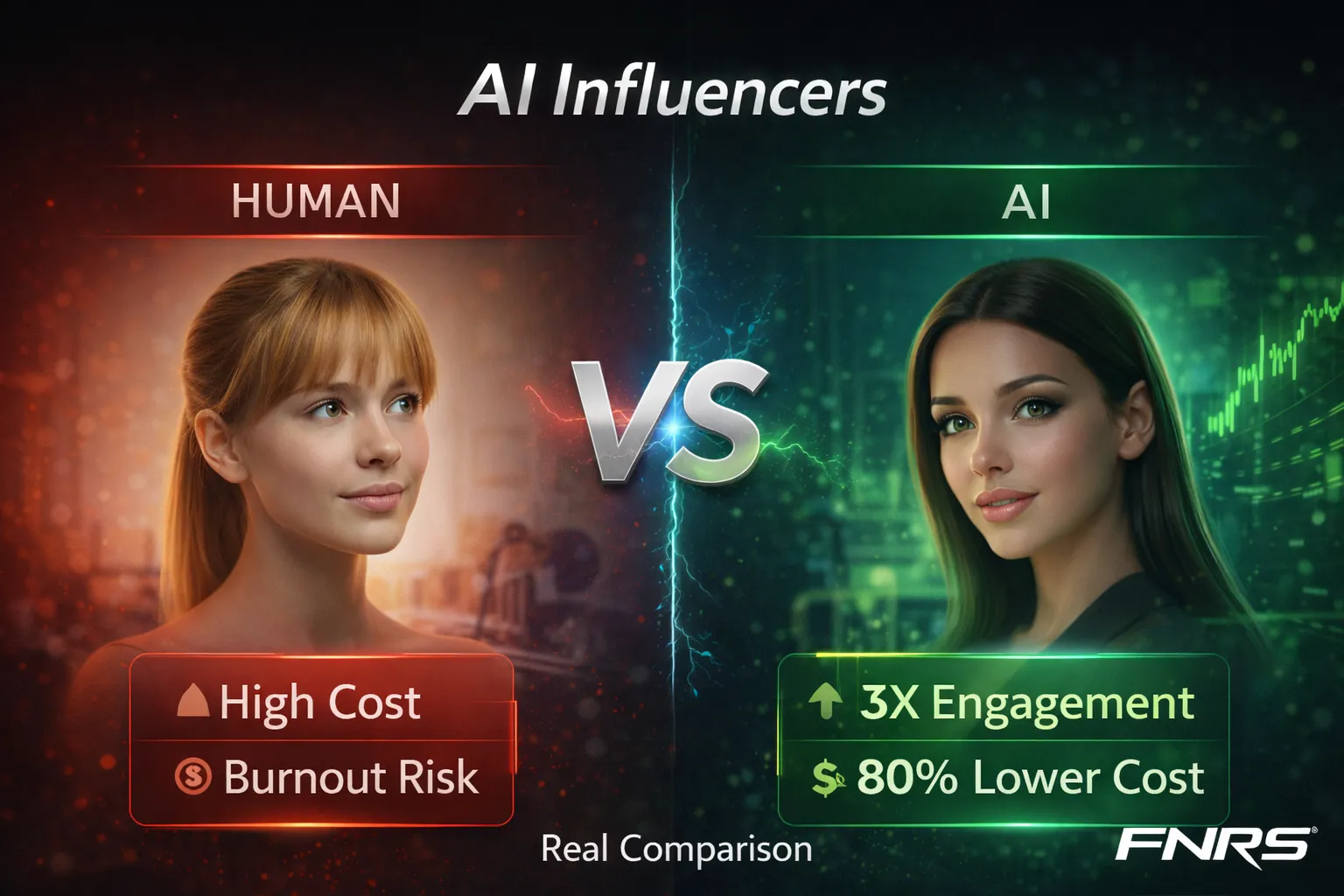

OnlyFans revolutionized creator monetization by giving people a direct way to sell content to subscribers. It's a powerful platform — but it comes with fundamental limitations that AI creator platforms like Fanerse have solved.
This isn't about bashing OnlyFans. It's about honestly comparing two approaches to content monetization and understanding which one offers better long-term economics and sustainability.
The Fundamental Difference
On OnlyFans, you are the product. Your face, your body, your time, your energy, your privacy — all of it goes into creating content. You can't scale beyond your own physical capacity. You can't take a vacation without content production stopping. And you can't build equity in something separate from yourself.
On Fanerse, you build the product. Your AI creators are assets that you own, control, and can scale independently of your personal involvement. You can run multiple creators simultaneously. You can produce content while you sleep (via Life Engine). And you can sell the creator itself on the Marketplace if you decide to exit.
The Economics Comparison
Revenue Split
- OnlyFans: Creators keep 80%, platform takes 20%.
- Fanerse Link Packs: Sellers keep 80%, platform takes 20%.
On the surface, the revenue split is identical. But the cost structures underneath are dramatically different.
Production Costs
- OnlyFans: Camera equipment ($500-$3,000), lighting ($200-$1,000), editing software ($10-$50/month), potential photographer fees ($100-$500/session), outfits and props ($100+/month), your time (2-4 hours/day for production).
- Fanerse: Subscription ($29-$149/month), occasional credit top-ups. That's it. No equipment, no studio, no wardrobe budget. Generate studio-quality content in minutes.
Scale
- OnlyFans: One creator — you. You can't create a second "you" to double your content. You're physically limited to one body, one schedule, one output capacity.
- Fanerse: 1 to unlimited creators depending on tier. Each with independent DNA, environments, and content pipelines. Run 10 AI creators for less effort than running one OnlyFans account.
Privacy
- OnlyFans: Your real identity is attached to your content. Permanently. This has career implications, relationship implications, and personal safety implications that many creators don't fully consider until it's too late.
- Fanerse: Complete anonymity. Your AI creators are fictional characters. Your real identity is never exposed. Zero personal risk.
Longevity
- OnlyFans: Aging, lifestyle changes, health issues, and burnout all threaten your content production. The average OnlyFans creator career is 2-3 years before burnout or life changes force a pivot.
- Fanerse: Your AI creator never ages, never burns out, never has an off day. Content production can continue indefinitely with consistent quality.
The Hybrid Approach
It's worth noting that these aren't mutually exclusive. Some of the smartest operators use both:
- Use Fanerse to build AI creators that drive traffic and build audiences.
- Use OnlyFans or Fanvue for subscription monetization with the AI content.
- Use Link Packs for direct sales that bypass platform limitations.
The platforms serve different functions. Fanerse is the production engine. OnlyFans, Fanvue, and social media are distribution channels. Separating production from distribution gives you maximum flexibility and minimum dependency on any single platform.
The Real Question
The question isn't "Fanerse or OnlyFans?" It's: do you want to build a content business that's dependent on your physical self, or one that's built on scalable digital assets? Do you want to trade your time and privacy for money, or invest in assets that generate revenue independently?
For most people, the answer is increasingly clear. AI creators offer better economics, better scalability, better privacy, and better long-term sustainability than personal content creation.