The "AI vs human" debate in the influencer space generates a lot of opinions and very little data. Let's fix that. This is a factual comparison across the metrics that actually matter — for both brands considering partnerships and creators deciding which model to pursue.
Engagement Rates
AI influencers: Average 3-5% engagement rate on Instagram across the 10K-500K follower range.
Human micro-influencers: Average 1-3% engagement rate in the same follower range.
Human macro-influencers: Average 0.5-1.5% engagement rate.
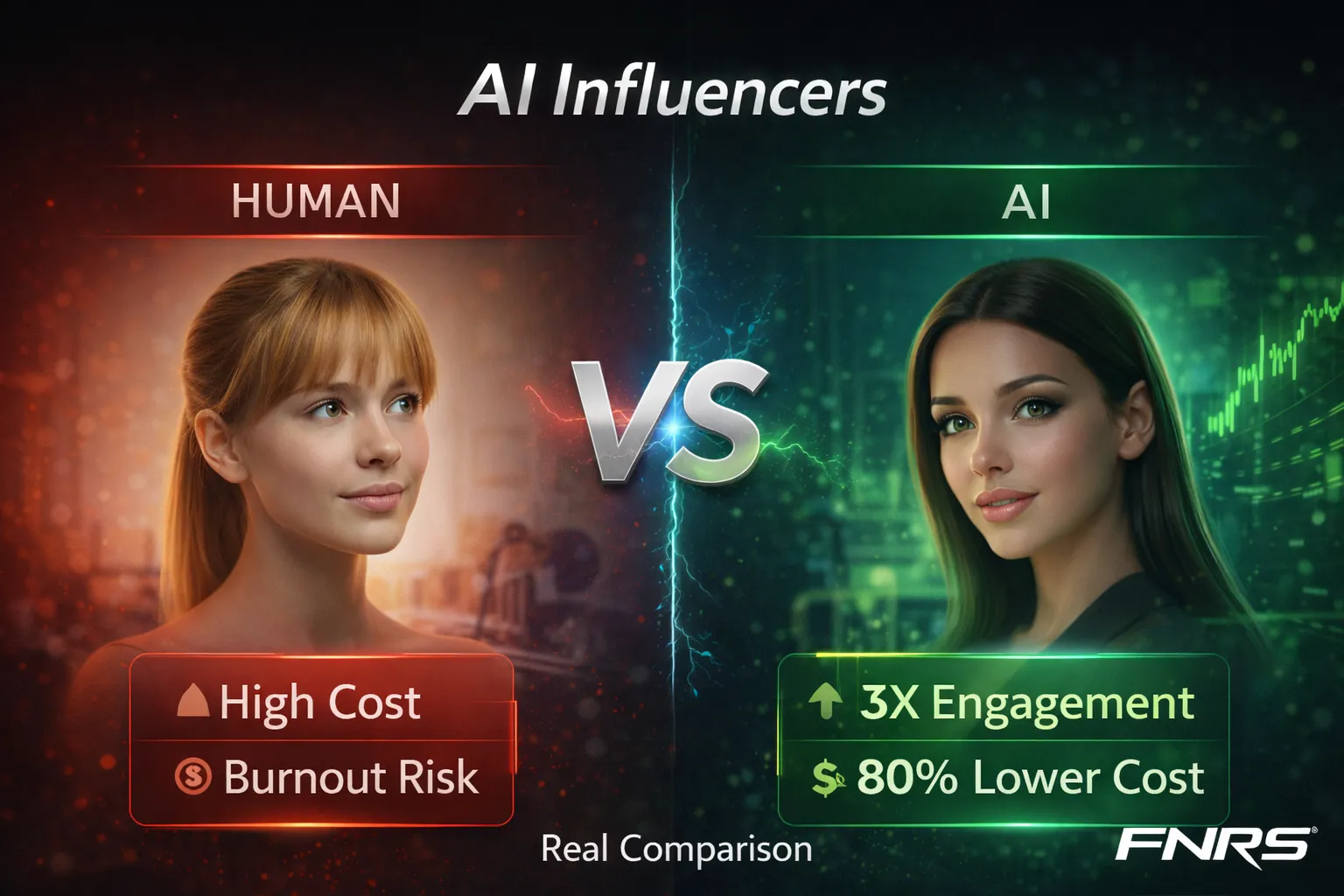
AI influencers consistently outperform on raw engagement metrics. The reasons are debated — some attribute it to novelty, others to visual consistency, others to the higher content quality that comes from curated AI generation versus the hit-or-miss nature of human photography.
The engagement quality differs, however. Human influencers tend to get more personal, conversational comments. AI influencers get more reactions to visual content and more curiosity-driven engagement. For brand partnerships, what matters is click-through rate and conversion — and there, the data is still emerging.
Production Costs
AI influencer monthly content budget:
- Platform subscription: $29-$149/month
- Additional credits: $0-$200/month
- Total: $29-$349/month for daily content across all scenarios
Human influencer monthly content budget:
- Photography/videography: $500-$3,000/month
- Equipment and studio: $200-$500/month (amortized)
- Wardrobe and styling: $200-$1,000/month
- Editing and post-production: $200-$800/month
- Total: $1,100-$5,300/month for comparable content volume
The cost advantage of AI is dramatic — roughly 80-90% lower production costs for comparable content volume and quality. For solo operators, this is the most significant practical difference.
Consistency
AI: Every image is at peak quality. Same face, same body, same aesthetic. No bad skin days, no unflattering angles, no weight fluctuation between seasons. The DNA system ensures absolute visual consistency.
Human: Natural variation in appearance, energy, and photo quality from session to session. This variation can be part of the authenticity appeal, but it also means inconsistent brand presentation and occasional off-quality content.
For brand partnerships specifically, consistency is a major advantage. Brands want predictable, on-brand content. AI delivers that with near-zero variance.
Brand Safety
AI: Zero risk of personal scandals, controversial statements, legal issues, or behavior that contradicts brand values. The creator's behavior is 100% controlled.
Human: Inherent unpredictability. Even the most professional human influencers can make mistakes, have personal crises that become public, or express opinions that alienate brand partners. The risk is managed but never eliminated.
For risk-averse brands, this alone justifies the shift toward AI influencer partnerships.
Scalability
AI: One operator can manage 10+ creators simultaneously, each producing daily content. Revenue scales with portfolio size while costs scale sub-linearly (one subscription covers all creators).
Human: One person can be one influencer. Scaling requires hiring, managing teams, and significantly higher costs per additional creator.
Authenticity and Connection
This is where human influencers maintain an advantage — for now. Genuine personal stories, real emotions, lived experiences, and authentic vulnerability create a depth of connection that AI characters can't yet replicate. Audiences who value "realness" will always prefer human creators.
However, the definition of "authenticity" in social media is evolving. In a world where human influencers use heavy filters, professional editing, and curated narratives, the line between "authentic" and "manufactured" was already blurring before AI entered the picture.
The Verdict
AI influencers aren't replacing human influencers — they're creating a new category alongside them. For brands, the choice between AI and human depends on campaign goals: brand safety and consistency favor AI, personal storytelling and depth favor human. For creators, AI offers a scalable business model that doesn't require putting your own identity online.
The smartest approach in 2026 isn't choosing one or the other — it's understanding the strengths of each and deploying them strategically.